Why Foundation Settling Is So Common in Tract Homes — and What to Do About It
If you've noticed a new crack in your slab, a door that suddenly sticks, or a slight slope in the floor, you're not imagining it — and you're not alone. Foundation settling is one of the most common issues we see in production-built subdivisions, and there's a real reason it shows up so often in tract homes specifically.
Why Tract Homes Settle More Than Custom Builds
Production subdivisions are often built quickly on compacted or engineered fill soil rather than undisturbed native ground. That fill settles gradually over the first decade or two as it compresses under the weight of the structure — unevenly, which is what causes cracks, sticking doors, and sloped floors rather than the whole house sinking evenly. Because entire subdivisions are built on the same graded lot at the same time, it's common to see the same settling pattern show up across dozens of homes on the same street within a similar window of years.
Is It Covered by Insurance or the Builder's Warranty?
This is the question we get asked most, and the honest answer is usually no. Standard homeowners insurance typically excludes normal soil settling and only covers foundation damage tied to a covered peril like a burst pipe or a storm. Builder structural warranties are typically limited to a defined window — often 1 to 10 years — and most builders decline settling-related claims once that window closes. That combination is exactly why independent foundation repair, not an insurance claim or a warranty request, is the realistic path for most tract-home owners.
What Foundation Repair Actually Costs
New foundation construction runs $20,000–$50,000 or more. Repairing or stabilizing an existing slab is a different, much smaller category of cost — typically $3,000–$15,000, depending on the severity of the settling and the number of piers required. We diagnose the actual cause before quoting a number, because soil movement, an under-slab plumbing leak, and poor drainage each call for a different fix.
Can You Stay in the House During Repair?
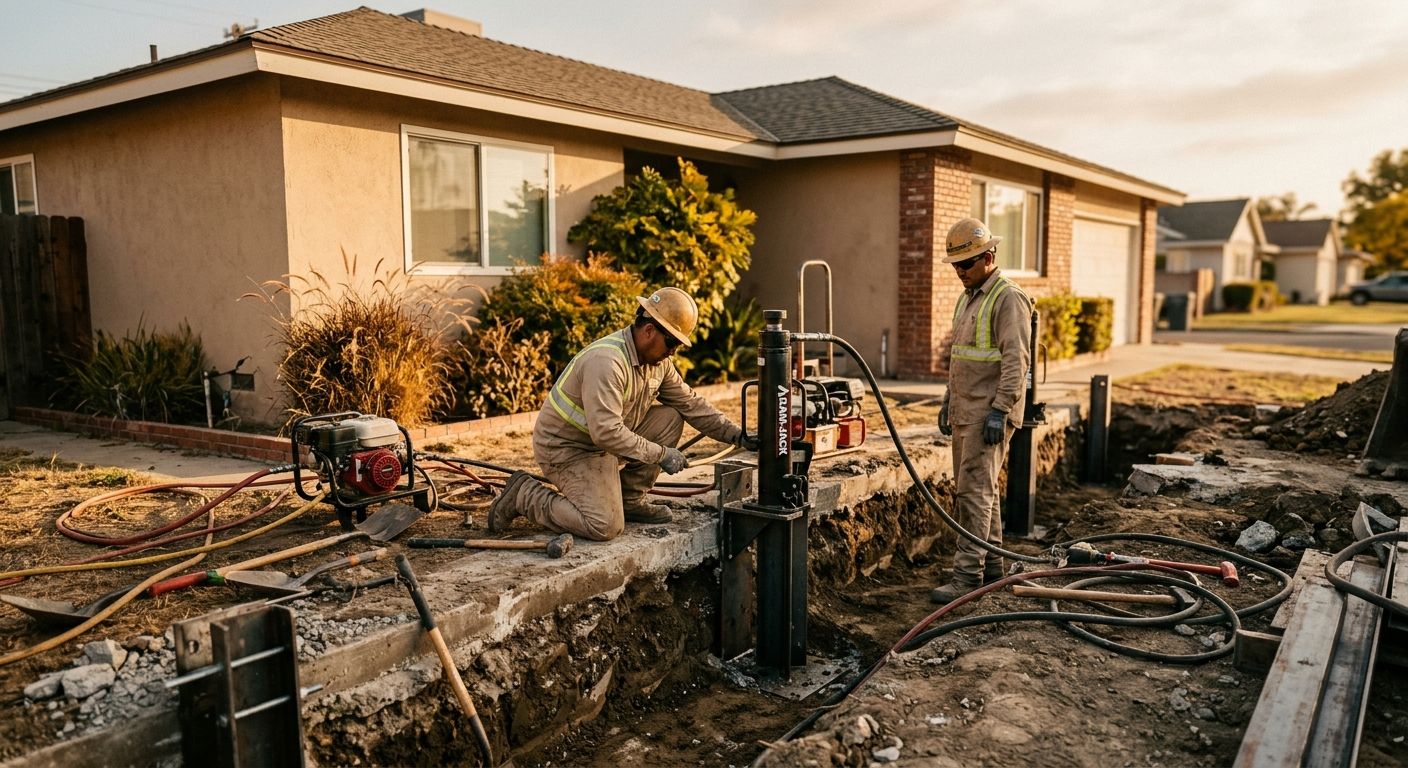
In most cases, yes. Pier-and-beam and slab pier repair methods are typically completed in 1–3 days for a standard residential job, and most homeowners don't need to relocate during the work.
Why Waiting Costs More
Unaddressed settling doesn't stay the same size — it tends to get worse and more expensive to fix over time, and it can affect resale value even when the underlying issue is minor. If you're planning to sell, a foundation issue disclosed and repaired ahead of listing is almost always a better outcome than one a buyer's inspector finds first.
Get a Real Diagnosis
A cracked slab can mean several different things, and the fix — and the cost — depends on which one it is. We start every foundation repair project with an on-site diagnosis, not a sales pitch.
Request a free quote to get your foundation assessed.